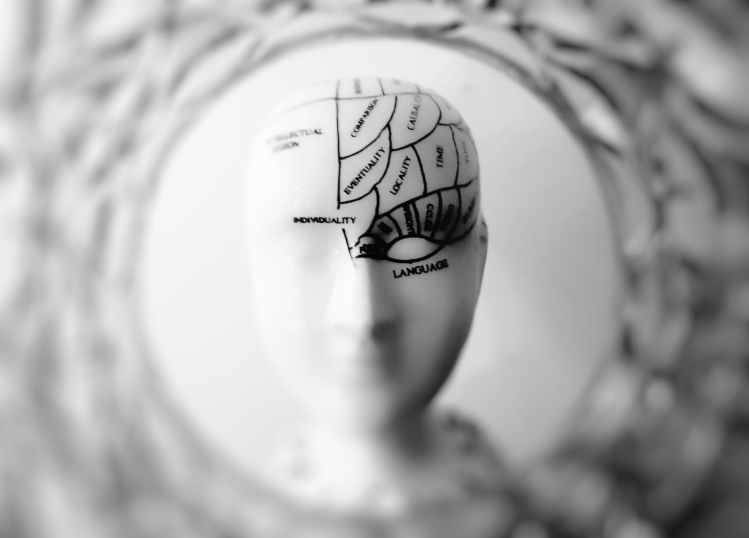
The First Discourseman
It seems every age claims enlightenment- in the eighteenth century The French Revolution considered itself the advent of a new rational era; in the early twentieth century the philosophy of logical positivism affirmed that the only type of knowledge was scientific; then at the end of the century the fall of the Berlin Wall ostensibly marked the beginning of a new political consensus of liberal democratic values. The prophets of rationalism constantly rise up- the Steven Pinkers and the Richard Dawkins’s, heralding the way to a new and better age where reason, truth, facts and logic will influence political systems, social interactions and ethical debates. If reason sits in its own realm, accessible by all who put their minds to it, everyone should reach the same conclusions eventually. It’s seen in the discussion around COVID too- for many, the decrees of the scientists are the final word on the matter since scientists possess an objectivity and perspicacity the general population lacks, as if there is no moral or prudential element to public policy.
The very history of rationalism makes the case against it quite well. Within a decade the French Revolution had succumbed to the strongman Napoleon, and quite happily too. No sooner had Francis Fukuyama predicted the telos of worldwide liberal democracy did it start to be shaken by explicitly irrational internal forces like populism, or undermined by the enduring success of theocracies and dictatorships. At the same time though, rationality has increasingly gripped the West’s mind in other ways. Quantitative data has become integral to discussion of most topics, aided by the ease of access Google provides to websites, studies or academic papers.
One obvious and widely acknowledged problem is with studies themselves: it is now as important to know about the ease of manipulating data as it is to know data. Even when statistics haven’t been misconstrued, intentionally or otherwise, there are further problems in the nature of studies themselves: statistically insignificant findings tend not to be published, a fact or a study likely exists which bolsters your pre-existing convictions, and there is a general ‘scientification’ of life where everything is reduced to a figure or a survey question. Measuring the success of nations, the happiness of individuals or the virtues of immigration policy becomes a matter for the scientists and economists, those least equipped to make judgements about the data.
Hence the deeper problem with rationality isn’t so much what it quantifies but what it fails to quantify. The notion of ‘tacit knowledge’, or the demarcation between technical and traditional knowledge isn’t a new idea but it’s certainly a relevant one. Technical knowledge calculates, it is easy to learn (in the sense that one can read about it) and it doesn’t possess an obviously moral dimension. It is characterised by the tendency to simplify and abstract. Books on becoming a better person, or apps teaching you a language or a skill, typify an era of technical knowledge. Virtue is no longer an ethic to cultivate but a set of attitudes to read about and adopt- only make sure the rest of the world knows about your virtue too.
Conversely, traditional knowledge is experiential and incommunicable, learned through practice and mediated through wisdom. This ranges from the mundane, like cooking or painting, to the significant: running a country or deciding on a verdict in the courtroom. The teaching of the Bible, indeed of most historical religions and cultures, to respect parents and elders is one obvious way of valuing traditional knowledge. So too is a conservative disposition, seeking to preserve certain institutions or a particular way of life because they contain some inexpressible type of knowledge.
Carrying this over into realms like politics, economics or theology changes the way we perceive them. Theology shouldn’t simply be taught as a set of doctrines to learn off by heart. In a very tangible way, someone from outside a religion will never possess the knowledge of someone steeped in it- more broadly we should be wary of scholars who don’t have first-hand knowledge of their subject area. In economics it means there is a type of data that can’t be captured by mathematical models, hence Hayek’s argument against state planning and in favour of individual consumer choices from epistemological premises. It also means there is little room for homo economicus, the individual who calculates rationally and thinks in terms of utility. So many people were unable to understand why deprived areas of the UK voted heavily for Brexit, convincing themselves it was because they’d been misled about the economics. Perhaps it was because there were things more important to people than economic gain- community, culture, or national sovereignty.
However, there is an even deeper issue with rationality that is subtly masked by language and self-perception. At root, rationality is impotent. As one author says, “No great discovery has ever been made by the power of reason. Reason is a means of communicating, imperfectly, some discoveries to others.” Similarly, Nietzsche took aim at philosophers and rationalists of every stripe, explaining that “conscious thinking has to be considered an instinctual activity” rather than “cold, pure, divinely unhampered” logic. “The idea comes when it wants to”, subjecting us to the whims of our own consciousness. If nothing else it is an argument for taking psychology more seriously, but it implies that traditional knowledge precedes technical knowledge in an oft overlooked way. Particularly when discussing logic, or the presuppositions that shape one’s worldview, the takeaway has to be that there is no neutral, objective lens or common reservoir of rationality into which humans can tap. Kant may have thought he’d stumbled upon a timeless principle in his categorical imperative, and in the same way the Golden Rule is sometimes considered to be the final matter in ethics. It may be, but at the very least it is not a ubiquitous or a self-evident truth.
Philosophers have taken this in many different directions. It has manifested itself in wildly different forms: scepticism, conservatism, Romanticism, existentialism and fascism. Philosophies rejecting rationality often appear absurd, sometimes abhorrent, but they all share an understanding of the very definite limits of rationality.
 The Four Discoursemen