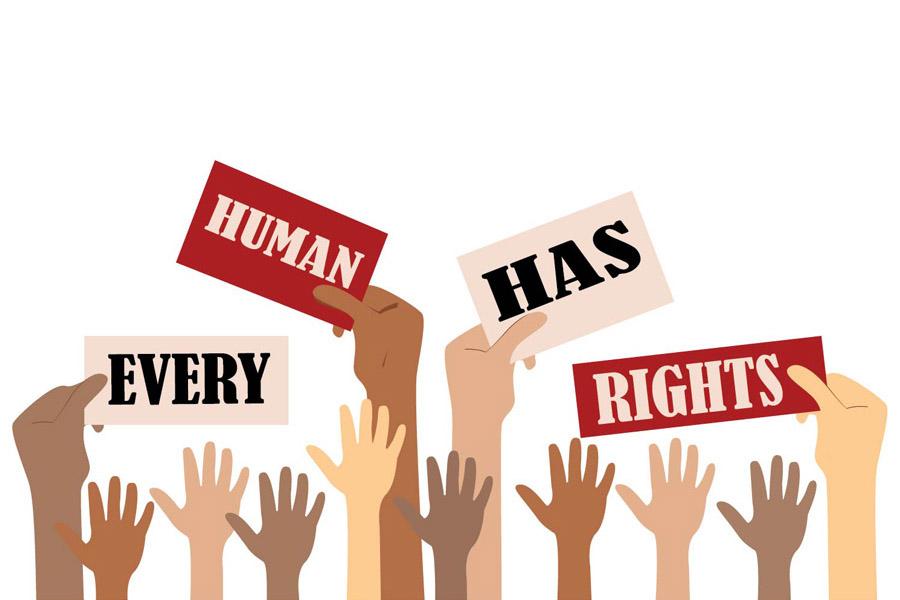
Okay but like – I’ll respect a conservative’s political beliefs when they respect trans people’s right to healthcare, poor people’s right to vote, asylum seeker’s right to safety, young people’s right to good mental health services and a decent standard of education, children’s right not to starve, disabled people’s right to marry without having their benefits cut, people’s right not to be subjected to police violence.
Some student on Facebook
The Third Discourseman
It seems like human rights are becoming increasingly popular. By this I don’t just mean that modern people care about humans not being tortured or abused (which is of course admirable). Rather, it seems like the list of what constitutes a ‘right’ is ever growing, and alongside this comes an increasing tendency to argue ethical matters on the basis of human rights violations. Take the above quote, taken from a student confessions page on Facebook. One can perhaps respect his care for the marginalised, assuming he himself does actually care for them. And one may well agree that many of the things he lists should be regarded as rights. But do disabled people really have a right to not have benefits cut when they marry? Do they even have a right to benefits in the first place? Note this is not just saying that helping disabled people out is a kind, generous, worthy thing to do (which of course in many cases it is), nor is it saying that communities/parents have a duty to look after the disabled among them (which they do). It is saying that disabled people have a right to expect continued financial support from the government, for their whole lives, and that something like getting married shouldn’t change that. Or take the comments on healthcare, health services and education. This is coming from the UK of all places, where all people, no questions asked, are freely educated by the state for 14 years and have free access to pretty much any health care they want! So what standard of education and healthcare does this person think we have a right to? Why comment on this trend? Well, I think there are several reasons to be worried and/or suspicious when the language of rights starts becoming more and more commonplace.
The first is that the language of rights breeds entitlement and bitterness rather than gratitude and contentment. As an example, no doubt many think that free health-care, or benefits, or similar state-funded care packages are rights (at the very least the above commenter seems to). So suddenly the NHS is not something to be thankful for, it is something we are entitled to, that we can rage about losing (should we ever lose it). How many times have you heard a student complain about the way the government handles the NHS, or the state school system, or free school meals? And how many times have you heard a student express some sort of thankfulness when they get expensive medical treatment, or years of education, for free?
The second is that it minimises individual responsibility. Again think of the comment above, claiming that disabled people have a right to benefits after marriage. Hidden in this claim are actually two quite separate claims. One is presumably some sort of claim regarding disabled people (and people in general who can’t work) being entitled to support. The second is that it is the government that owes them said support. Even if you hold the first claim, you needn’t hold the second. Why is not the burden of their family, or neighbours, or local community to support them? Why is giving poor children meals the government’s job? Why isn’t it yours? Rights are at heart legal things, enshrined by law and upheld by governments. Saying ‘people have a right to healthcare’ doesn’t answer the question of who has the responsibility to provide it, and when no answer is given the default seems to be ‘the government’, and so we can all escape our moral duties to care for those around us.
The third is that it shuts down ethical debate. I have seen various people argue for gay marriage or abortion or other things by saying ‘it’s a human right’. Well there you go, problem solved I guess. Only these things haven’t always been considered rights, and surely the fact that your government has now decided that they should be doesn’t actually make these things right or wrong. But of course, no one wants to violate someone’s rights. And no one should be forced to argue with someone who is against human rights, right? And so the person making the case that abortion is wrong just has to say ‘women have a right to do what they want with their bodies’ and the many philosophical considerations (like is killing a human always wrong, at what point should a foetus be considered human etc) can be sidestepped. Once something is labelled ‘a right’ it seems to be suddenly elevated beyond discussion, beyond debate, as if the fact that some government put it on a list means it’s now self-evidently true.
This is why I think the language of rights is reasonably scarce in the Bible. Because before God, we are entitled to very little. We are given much more than we deserve, whether we’re simply creatures being allowed to remain in God’s world even as we ignore him, or children of God given grace beyond comprehension. We are to live with gratitude and in humility, accepting our lot in life as what God has given us. What we do get in the Bible is commands, obligations. Whilst we might want to duck our responsibilities, God is very keen that we fulfil them. And I suggest this is a better way to think about things. The right to life becomes a command not to murder. The right to food and healthcare becomes a command to love your neighbour. And so we can live with gratitude for the things we’re given, receiving them as gifts, not as our due. And we can live with a mind to what we can do, how we can obey God’s commands, rather than expecting the state to do all our good works for us. And we can, in light of God’s word, try to discern what is actually right and wrong, good and evil, instead of just crying out ‘human rights’ when someone challenges our culture’s moral values.
 The Four Discoursemen