The Second Discourseman
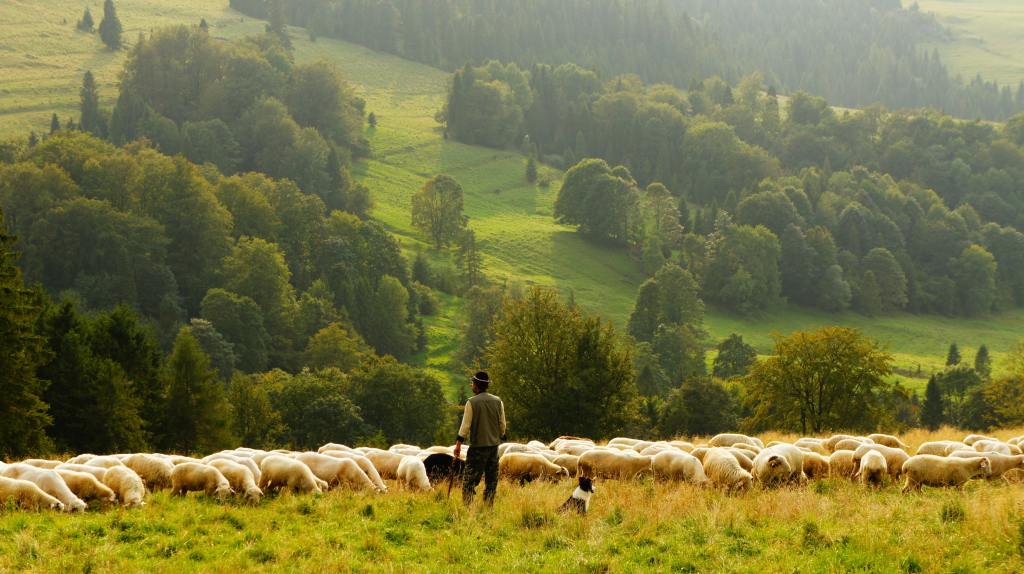
What does Jesus mean when he says that the shepherd ‘calls his own sheep by name’? I have no idea whether first century farmers named their sheep, but we humans have names, so we might assume that this is just a picture of Jesus’ personal call to each of his flock. Our names are good gifts to us from our parents, and it is a lovely thought that one day I will hear my Lord call me by the name that my father and mother carefully chose. Not all names are so tenderly chosen, though: I can’t help but wonder whether Christ will call Elon Musk’s poor son by that hideous alphanumeric mess, ‘X AE A-XII’. I suppose that’s my Lord’s business, not my own, but it indicates that names can be imbued with the arbitrariness, ugliness or emptiness that characterise so many human choices.
Throughout the Bible, we see that God’s name is far more than just an arbitrary word, but that it represents the fullness and mystery of his character (e.g. Exodus chapters 3 and 34). Perhaps there’s a suggestion of something similar here in John 10, applied to human names. I recently visited a dairy farm, and the farmer explained that he knew each of his hundred cows individually, but not by name. Of course, there were the physical features to distinguish them, but he also knew the demeanour and behaviour of each one. Christ is our shepherd: he knows us not just by a label, but by our characters.
This is more than just a reminder of his love for us (though not less than that!). Jesus leads us by name, in and out, from sheepfold to pasture. He cares for us according to his knowledge of our frames, in every aspect of our lives. This is the assurance that we will have life, and will have it abundantly – because Christ is our shepherd. He knows our characters, what food we need, how we need to change, how best to guide us through eternity.
Indeed, he knows our very worst. My farmer from before told of how a bull once knocked him to the ground, lined up to finish him off, but turned away at the last. That’s going to bring new depth to the farmer-cattle relationship. With Jesus, the bulls of Bashan surrounded him, and they did kill him. He doesn’t just know our sin through his omniscience, but through his experience. He has felt our greed and envy and cruelty and betrayal. The twist is that the bulls were the ones he died to save; or in the language of John 10, he laid down his life to keep the sheep from the wolves. It is at Calvary that Christ calls us by name in the deepest sense. He looks at us, as our wickedness is laid upon him and directed at him, and he bids us come.
The knowledge that Christ the shepherd has of us is unfathomably deep; thus when we hear his voice – and we will know it to be his – we may follow him happily, knowing that he will keep our going out and our coming in, from this time forth and for evermore.
 The Four Discoursemen