The First Discourseman
Since moving into a city, I have wondered about the spiritual dimension to geography, and how a city can shape our reality.
Cities are not unbiblical, but they are often the centres of sin: Babel- later Babylon-, Sodom, Gomorrah and Jericho are just a few examples of the cities upon which God casts his judgement. The Bible begins with a garden, since the garden symbolises blessing, serenity and ultimately God’s presence. The first aggregation of sin comes in Babel, whilst the skyscraper is the first idol ever constructed. Revelation finishes with the New Jerusalem, but in the New Creation it is a garden city as an indicator of its redemption. God is present and active in cities as much as anywhere else, but we can overlook the importance environment has on our consciousness and habits. Jesus withdraws to quiet places to pray, and balances a public ministry with private reflection and prayer.
I spoke to someone recently who had written at length on the act of reflection. They reminded me of the dual meaning it possessed, but which we typically ignore. To reflect is more than thinking and meditating and ruminating. Reflection involves gaze, imitation, and mirroring.
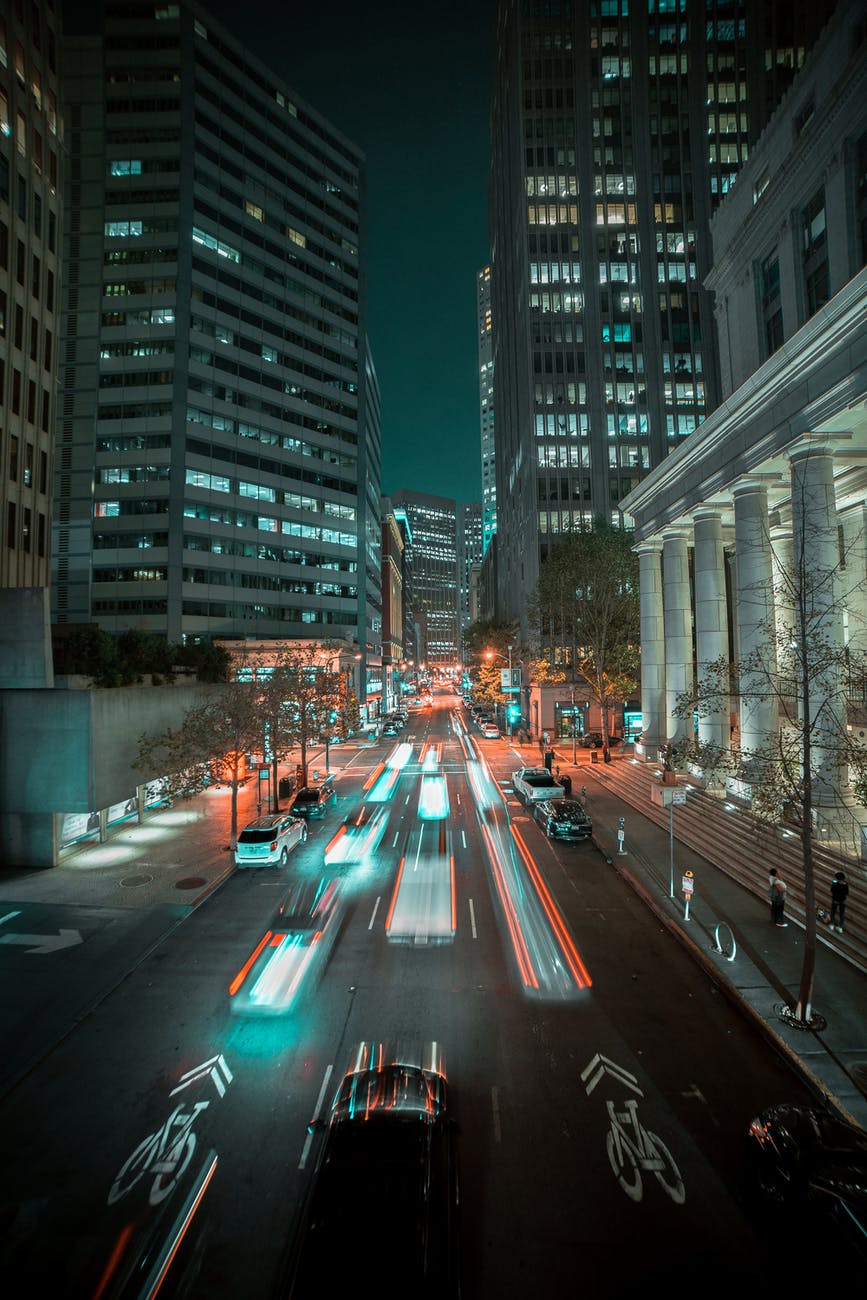
A city is generally a place with very little time for reflection. It is a monument to productivity and connectivity. It machinates, conspiring to quell reflection where it sees it. Work starts early and finishes late- the hours in between are mindless and relentless. Lunches are spent building networks, maintaining friendships, or attempting to switch off. Evenings and weekends become valuable currency, thus time for reflection is rarely purchased. Friends, sport, alcohol, Netflix, and sleep together round off life, and ultimately keep the mind away from that place of reflection.
In a city one is in a sensory overload, rarely at peace. As I write this, a fleet of police cars rush by the window, whilst countless voices in the street chatter and converge, a train horn sounds in the distance, and (predictably) a dog barks. The constancy, volume and variety of noise dampens any inner voice and forces the mind away from itself, always on to something new. It is a concrete jungle, enveloping the citizen in shades of grey, day in and day out. Skyscrapers are testament to mankind’s majesty, blotting out all clouds and sunlight and perspective. The city leads to feelings of simultaneous claustrophobia and agoraphobia. There is something profoundly unnatural in how removed the city is from creation, where the park is as consciously planned as the road.
When the mind and soul are unable to disengage, they are eventually filled by their environment. As Marx said, “It is not the consciousness of men that determines their being, but, on the contrary, their social being that determines their consciousness.” People are a product of their social context, and the open mind will be indelibly marked by whatever enters. To put it another way, humans start by reflecting on their environment, then start to reflect their environment. Or, as Nietzsche warned, “If you gaze too long into an abyss, an abyss will gaze back at you.” The city will ultimately imprint itself on us, moulding us violently or gently into its image. The city is not an idol but, like an idol, it is both artificial and powerful. It replaces stability with transience, community with networks, the natural for the synthetic, and tranquillity with cacophony.
Though it may sound strong, these changes can be characterised as a loss of liberty. In modernity, ‘liberty’ has a narrow definition- it is the absence of restrictions on a person, whether physical, mental or social. However, this is a one-dimensional understanding of liberty. It frames liberty negatively, as the absence of limitations, believing humans to be masters of their internal reality. It concords with a tabula rasa theory of human nature, implying humans are both rational and capable of asserting that rational will. With that anthropology, most problems have simple solutions. I have argued that the city is particularly unconducive to reflection, but one could respond it is a matter of trying harder; just consciously blocking out time to reflect. If reflection is only a choice, however hard that choice may be, it is still there.
In some matters though, freedom is equivalent to deprivation. In his book ‘Prayer as a Political Problem’, the Catholic theologian Danielou recognised that modernity was not conducive to a life of prayer; a life which was hard enough to achieve as it was. As with the process of reflection, “prayer belongs not to the strictly interior life of man”, hence why it was a political and cultural problem. Certain conditions are helpful to the point of being necessary, if there is to be such a thing as the reflective, prayerful citizen. Hence why some of the most prayerful people exist in monasteries, where prayer, fasting and meditation are built into the daily routine. They do not join monasteries because they are already prayerful, but to live in conditions where frequent prayer is possible.
Institutions like family and church are invaluable in cultivating a positive freedom where goods such as reflection and prayer can be successfully pursued. A proximity to physical, authentic reality is also paramount. In public and in private, a general orientation towards virtue is required, where certain postures and practices can be facilitated and upheld. In forgetting that we are shaped by our environment more than we ever shape it, we often don’t give due consideration to aesthetics, geography and culture as influences on parts of life as seemingly unrelated as our capacity for worship or self-reflection.
 The Four Discoursemen