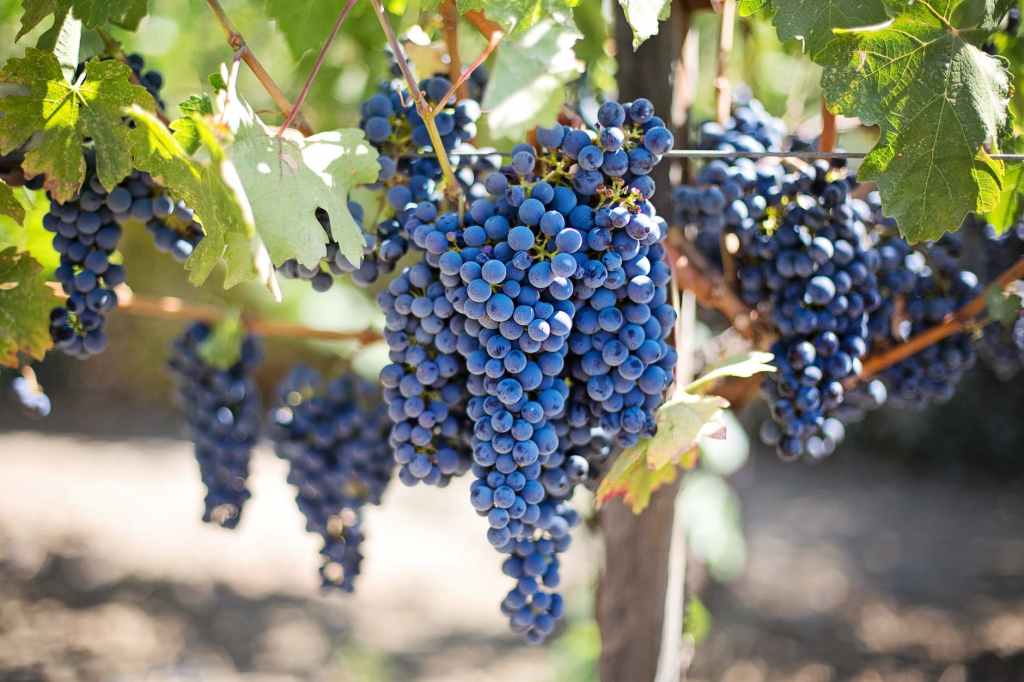
Then Bacchus and Silenus and the Maenads began a dance, far wilder than the dance of the trees; not merely a dance for fun and beauty (though it was that too) but a magic dance of plenty, and where their hands touched, and where their feet fell, the feast came into existence sides of roasted meat that filled the grove with delicious smell, and wheaten cakes and oaten cakes, honey and many-coloured sugars and cream as thick as porridge and as smooth as still water, peaches, nectarines, pomegranates, pears, grapes, strawberries, raspberries, pyramids and cataracts of fruit. Then, in great wooden cups and bowls and mazers, wreathed with ivy, came the wines; dark, thick ones like syrups of mulberry juice, and clear red ones like red jellies liquefied, and yellow wines and green wines and yellow-green and greenish-yellow[1]
Christians like C.S. Lewis for his apologetics – quotes on suffering or the nature of miracles. Lewis is good at those sorts of quotes. The World likes C.S. Lewis for his bizarre and fantastical imagination, like a child finding a snowy wonderland through a wardrobe. In this the World understands Lewis better than some Christians.
I will call Lewis’s project reformed paganism, because he is engaging in a project as old as the Church herself of reconciling the World to Christ. Lewis understands Christ’s victory extensively enough to co-opt the half-truths of every culture, highlighting how they contribute just a small brush-stroke to the universal canvas. Lewis recognises the truth of myth, both literally or symbolically. Satyrs, minotaurs, dryads, dragons, giants and more feature in the world of Narnia, not as fantastic beasts but as atavistic reality. Even if they’re no longer present in the world, there was once a time for them. As Lewis details in a different novel,
Have you ever noticed that the universe, and every little bit of the universe, is always hardening and narrowing and coming to a point? Getting sharper and harder. All the gods, elves, dwarfs, water-people, fate, longaevi…. I think there was room for them then, but the universe has come more to a point.[2]
Perhaps stretching as far back as the Fall, Lewis thinks the universe is reifying and polarising: bad and good, material and spiritual, human and animal, nature and civilisation. And as with Heaven and Earth, there will one day be a judgement and unification.
So when Bacchus throws a party in Narnia, or when Merlin is resurrected in That Hideous Strength, or when the protagonist comes face to face with the Greek pantheon, Lewis wants to open the reader to an enchanted worldview where such things are really possible and have some connection to a basic human knowledge of the world.
As I said, this project is as old as the Church herself. Our modern minds gloss over pages of Scripture which tell of giants, angels, or Paul’s allusions to a third heaven. But Scripture is rich with enchanted language. Early Church fathers naturally reconciled the pagan and the Christian, just as “Christ is reconciling to himself all things”. Augustine affirmed the philosophers “who have recognized the true God as the author of all things”[3]. Thomas Aquinas’s synthesis of Aristotelian and Christian thought was the apogee of the medieval church. The Renaissance was a triumphant Christian reclamation of classical culture, where Athens and Jerusalem united.[4]
The assumption behind this project, which the church only lost quite recently, is the enchanted – or sacramental – view of the world. Where moments, objects or emotions are casual rays of magnificence. The sacramental world has room for magic, mystery, emotion, eros, symbol, and the sacred. God is expressed in His infinitude when we truly look at the world, not just see it, noticing the majesty that exudes from the most quotidian places.
When ancient civilisations deified the sun or pictured Cupid with his bow, they were closer to the truth than our modern minds because they viewed the world sacramentally. In Narnia, a star falls from the sky in the form of a beautiful woman. Someone remarks that “in our world, a star is a huge ball of flaming gas”. These are the eyes that look but do not see. Aslan replies that “even in your world, my son, that is not what a star is, but only what it is made of.” In a similar vein, the protagonist in the Space Trilogy hurtles through space, kidnapped and fearing for his life, but each day all he does is gaze at the stars “thick as daisies on an uncut lawn”. The lights “pouring or even stabbing into his surrendered body”, he finds it “night by night more difficult to disbelieve in the old astrology”.[5] Very few Christians now believe in astrology; even fewer have thoughtfully worked through what Christian astrology might entail. But it’s possible the pagans (and early Church Fathers) observed a truth our minds just don’t want to comprehend.
Reformed paganism is reclaiming the old myths and fairy tales for the Lord. Using worldly philosophies to enhance Christian truths. Seeing majesty and magic in unexpected places. Recognising that the world even now points to the consummation of Heaven and Earth. As C.S. Lewis understood so well, it is appealing to the perennial, childlike instinct in us all for a weird and wonderful world.
The First Discourseman
[1] C.S. Lewis, Prince Caspian http://www.samizdat.qc.ca/arts/lit/PDFs/PrinceCaspian_CSL.pdf, p.113
[2] C.S. Lewis, That Hideous Strength, The Space Trilogy (Harper Collins, 2012), pp.619-20
[3] Augustine, City of God (Roman Roads Media, 2015), https://files.romanroadsstatic.com/materials/romans/nicene-christianity/City%20of%20God.pdf, p.100
[4] https://twitter.com/culturaltutor/status/1567877496967729153?s=20&t=Pt_6EgoY11qApkD6IJqrOg
[5] C.S. Lewis, Out of the Silent Planet, The Space Trilogy, p.28.
 The Four Discoursemen