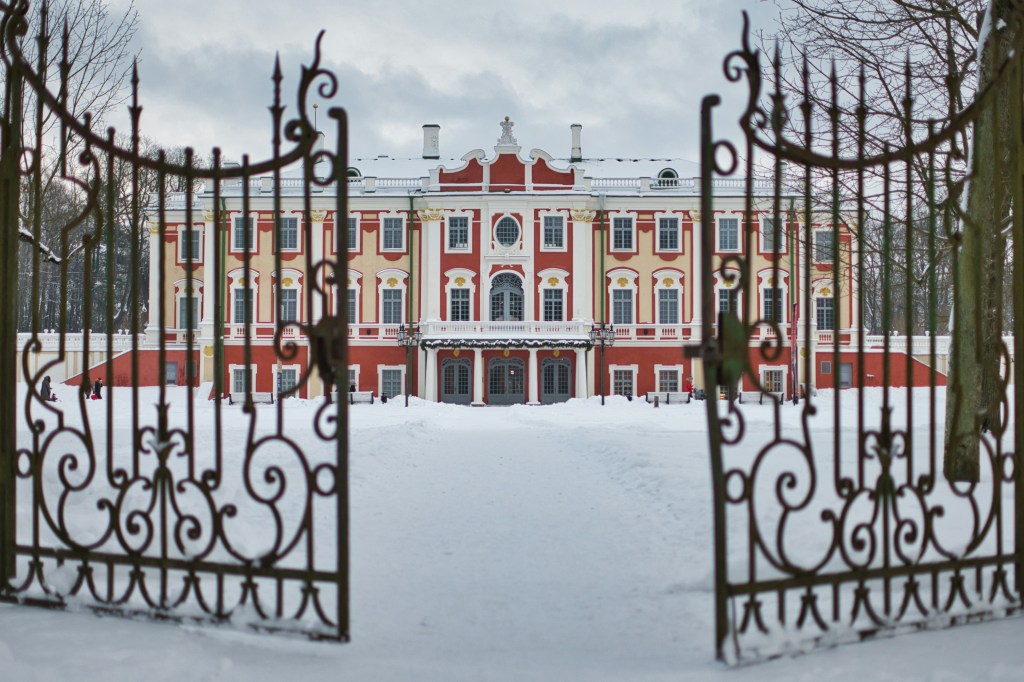
The King looked out into the white-specked night and groaned. “So no more flesh and wine, no burning pine logs in the hearth, no merriment?”
“Your Majesty, nothing of the sort,” smiled the baron oilily. “It is Christmas, a time of feasting and good cheer. We are merely and humbly advising – advising, mind – that this year you rein in these public displays of benevolence.”
“It was not a display; it was one peasant and his family.”
“A low-income household, Sire, not peasant, remember. But who knows what may come of it? Others might hear and soon you may be feeding a whole hamlet each Christmas – or even a village!”
“And what harm would that be?”
“It is not seemly for Your Inestimable Majesty. We have grave issues inside and outside our lands, and we must present an image of strength and seriousness. It is a challenging enough season for us political minds, what with tales of babes in mangers and bowing shepherds – so much sentiment in the air.”
“That tale of which you speak is the Nativity of our Lord Jesus Christ,” growled the King.
The baron shrank back and another voice spoke: “Admirable theology, Sire.”
It was the Archbishop, his face drawn out piously under his tall mitre. “Admirable theology indeed, and surely that must be our focus? Christmas is not about such material things as food and drink, is it? Much, much better, Your Majesty, to spend the morning in devotion, to attend church, and then to enjoy the rest of the day in godly, domestic bliss.”
“You mean gorging and drinking myself silly in sight of no-one?”
“With your customary temperance and moderation, Sire – but there is a place of feasting in our calendar, is there not? And let us not try to mingle it with charity – a most necessary virtue in its rightful place, oh certainly! – but there would be whispers of hypocrisy, of self-righteousness.”
The King fixed the Archbishop with a glare. “Hypocrisy, for one day of the year to actually practise what I believe? I suppose it would be better to just forget it completely.”
The chief steward broke the silence which followed. “Sire, I must let you know that arrangements have been made for the feast tomorrow. We have provided for the worthiest of the nobility and clergy, with generous invitation to many commoners too.”
“Pray tell, which commoners? The poor financiers and hungry merchants who usually find succour in these walls?”
The chief steward indulged his monarch with a smile. “Of course, if Your Majesty desires any final changes to the plans, I can wake the kitchen and cellar staff forthwith?”
*
“Hither, page, and tell me. Would you ever wish to take my place this Christmas Eve? I cannot abide the prospect of a day spent with the most odious, grasping gaggle of counsellors with which a King could be cursed. To see them tearing at their fare and belching into their goblets… and the quarrelling! Dukedoms and earldoms have gone to war between courses at our Christmas feasts.”
The page was a quiet lad with dangling limbs and watery eyes. “Truth be told, Your Majesty, every other day of the year there may be found a spot of envy in me, but not on Christmas Day.”
“And how will you spend your evening tomorrow, when I dismiss you back to your family?”
“Oh, we do not have much as far as feasting goes. But we will have a fine fire and we will sing songs around it until night and ale carry us off to sleep.”
“Do you sing well?”
“No, not well, though we sing together and with a bit of grace it all evens up quite nicely, yes it does.”
“I cannot provoke my barons, page. They are already muttering about rights and progress and reforms. No, I suppose I must attend the feast.”
As he sat, the monarch’s brow slowly unknotted and his fists unclenched. The tune of a carol was faltering through the window into his chamber. Outside the palace gates, three boys stood singing. They were dressed in bedsheets and tablecloths, and on their heads were crowns of coloured paper.
“Page, who are yonder kings?”
“Sire, those are the carol singers from the village at the foot of the mountain. Well, not all of them – in fact these look like they have got lost from the rest. Shall I send them away?”
“No, page – ready me a horse, and do so secretly.”
*
Thick, woollen cape around him, hood drawn low over his eyes, the King leapt into the saddle, pulled his page up after him, and rode out into the night. Eddies of snow spun into their faces and the wind gnawed at their ears, but horse, page and monarch swept towards the mountain. The road narrowed until it was just a black tunnel under the forest’s boughs, walls of glistening holly either side, and then they were out into the moonlit village square.
The King hurried to the largest of the houses and asked for the master. They spoke briefly, then the King returned to the horse and they set off again.
This was repeated at several more villages until the page nearly fell from the horse in exhaustion. The King wrapped his cape around him and sat him in front, and they rode – slower now in the deepening snow – back to the palace.
*
The chief steward had performed his duties magnificently. On the rude oaken tables were piled every kind of poultry, their crisp and shining skins decked with sprigs of rosemary and sage. Vast tree trunks of beef blushed in the candlelight and dried fruit burst out of puddings dusted with sugar. Everywhere wine flowed from flagons into goblets and from goblets down devouring throats. But the King sat pensively in the middle of the dais, picking at his food.
A servant rushed into the hall and spoke to the steward, who walked slowly to the King. “A visitor, Your Majesty.”
The King seemed to awake and without a word strode out the door of the hall. A few minutes later, he returned through the door with a haughty stare. The hall fell silent. “My Lords and Ladies,” declared the King – then he paused. “My Lord, the Earl of Mountfoot, and family.”
There shuffled through the door a curious figure. His face and hands had the ruddy, beaten hue of a blacksmith, but he was dressed in a green robe with a soft felt hat. On his fingers were rings set with emeralds. The contrast between face and dress was strange; but stranger still, as the Earl walked to his place, was that the first strangeness fell away, and a solemn dignity took its place, so that the gnarled hands seemed to merit their jewels. The assembled nobility looked on in wonder and made way for him and his family, who followed similarly attired.
The King, however, remained in the antechamber, and soon reappeared. “My Lords and Ladies, the Lord Viscount of Pinedale.”
This guest had the wan, subdued look of a village tailor, but his clothes were of the finest silks such as had not been seen since the coronation, and his shoes were buckled with silver. As he took his place, his neighbours noticed that he spoke with the burr of a countryman, but in a manner so genteel that their hearts were warmed with respect.
Shortly after, the King announced two nobles together: the Duke of Stonebridge and the Marquess of Oxenglade. The former seemed to have hands coated with flour, but this was forgotten against the great ermine cape which lay on his shoulders. The Marquess carried a roughly hewn staff in one hand, but at his side was a sword of keenest edge and gleaming hilt. They too, with their wives and children, took seats among the staring guests.
And so it went on. A footman standing by the palace gates might have told of a long line of peasants and labourers dressed in brown cloth and leather, waiting to enter through a small side-door. But time and time again the King announced dukes, earls, viscounts, marquesses, each clothed with splendid robes and jewels. They bore themselves with grace but also with a jovial humility, and soon stories and songs rang throughout the hall. The King had regained his appetite, eating and drinking merrily as he dashed from door to table and back. As more aristocrats entered, they were made to jostle for space on the benches; then some leaned on tables; and at last they simply stood wherever they could.
The food and drink kept on coming, though the number of servants seemed oddly depleted. One baron swore afterwards that the Duke of Underhall looked the very image of a lad who had just been serving his veal. Indeed, the King eventually had to send his barons down to the cellars to root out the last barrels and casks.
“Sire,” whispered the page to his master, “this is a feast!”
“My son,” replied the King, “the barons are right when they say that feasting is at the heart of life. But they forget that peace and charity are the blood which warms it. And look! Is there anything drab or staid or sentimental about this?”
The page looked at the honest faces riven with grins and song, at the Earl of Beyond-the-Fence dancing a jig on a table, at the son of Sheepmoor serenading the daughter of Oxenglade.
Suddenly the door opened once more. There nearly fell into the hall a young woman in threadbare rags and strewn with snow. She was gasping for breath and trembling terribly, but she managed to clutch to her chest a tiny bundle. Inside was the smallest baby, wildly sobbing.
The King rushed to her. “My Lady!” He placed a soft blue cloak around her shoulders, and took a diadem and set it on her brow. But the woman still stood shivering. “The baby, get him something,” cried the King to his attendants.
“Sire,” one answered, “we have nothing left! Every wardrobe is empty.”
Then the Archbishop rose. “There! This charade is revealed for what it is. The pretence of nobility is nothing compared to the pretence of charity. We all know that tomorrow these wretched folk will return to their hovels and be made to fend for themselves.”
He stopped as he saw the King’s blazing eyes. “Your Majesty, forgive my hasty words. But I am merely concerned that you are going to unnecessary lengths. We have systems in place, procedures to help the poor. You do not need to do any of this.”
“My Lord Archbishop,” replied the King, “you see peace and goodwill as gifts, and you are right. Further, you see them as gifts that we give, and here too you are right, but not fully. Before we give them, we receive them. To show love at Christmas is not a burden but a joy. You know that I do not always display true Christian piety, but the little I do, I am given. Indeed, it was from a babe long ago that I first received this gift. And to honour such a one is the greatest blessing of all.”
With that, he took the purple sash from his waist and wrapped it around the infant. Then he took the great crown from his head. It was a curious design, with a small coronet atop the main circle. In days long past, this was a reminder of heavenly authority, though his more recent ancestors had taken their own liking to the title of ‘King of kings’. With one swift movement, the monarch wrenched this coronet from the frame and weighed it in his hand. He knelt before the mother and child and placed the little crown on the baby’s head. The babe hushed and looked about. As the wind whistled outside, the fire in the hall leapt, and glistened in the eyes of the feasters.
The Second Discourseman
 The Four Discoursemen