A Fairy-Tale Ending; or, Shrek as a Paradigm of the Eschaton

The First Discourseman

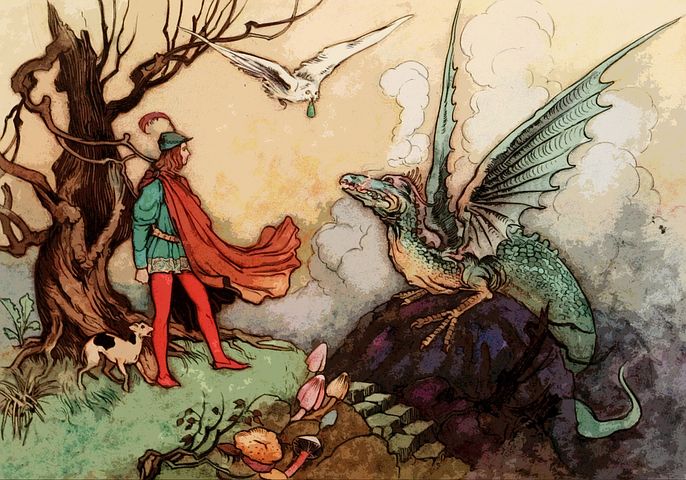
The beautiful princess leant on the balcony wall and gazed into the distance. For years she had suffered a lonely imprisonment in the castle, patiently awaiting the day when a knight in shining armour would come to slay the dragon, set her free and take her hand in marriage. She knew it was only a matter of time, for it was merely the pattern of the world.

Continue reading “A Fairy-Tale Ending; or, Shrek as a Paradigm of the Eschaton”


Christianity, conservatism, and the tyranny of the present

The Fourth Discourseman

Our age has a uniquely modern understanding of time. How we view the world around us, how we tell our own stories, how we grapple with social and ethical issues – all these are infected with what I want to call “the tyranny of the present”, the assumption that what is modern is best, that what is now upon us is the standard of what is true, and that – perhaps most insidiously – the labours and loves of our forbears have been leading, purposefully, to the establishment of this one moment, this now.

Continue reading “Christianity, conservatism, and the tyranny of the present”

The Name of the Sheep: Reflections on John 10

The Second Discourseman

What does Jesus mean when he says that the shepherd ‘calls his own sheep by name’? I have no idea whether first century farmers named their sheep, but we humans have names, so we might assume that this is just a picture of Jesus’ personal call to each of his flock. Our names are good gifts to us from our parents, and it is a lovely thought that one day I will hear my Lord call me by the name that my father and mother carefully chose. Not all names are so tenderly chosen, though: I can’t help but wonder whether Christ will call Elon Musk’s poor son by that hideous alphanumeric mess, ‘X AE A-XII’. I suppose that’s my Lord’s business, not my own, but it indicates that names can be imbued with the arbitrariness, ugliness or emptiness that characterise so many human choices. 

Continue reading “The Name of the Sheep: Reflections on John 10”

The danger of working too hard at the Bible…

The Third Discourseman

As a way of covering my own back, I’d like to state at the outset that the ideas in this post are ones I’ve only considered recently. I think they have enough merit to be considered, but I certainly wouldn’t die on any of the hills I’m about to make a stand on. So please, if you can spot any major flaws with what I’m saying, let me know!

With that out of the way, I am now going to take on the slightly strange task of trying to convince you (and myself) that there is spiritual danger lurking for the one who spends hours upon hours prepping a Bible study or talk or workshop or homegroup.

Continue reading “The danger of working too hard at the Bible…”

Matthew 5 and the Law of Christ

The Third Discourseman

Since there might eventually be people who support me in my ministry-training looking at this blog, and seeing as I write a couple of talks a term, either for the sake of practice/receiving feedback or actual talks I deliver for the sake of teaching, I thought I’d start uploading some of them as blogs, along with any feedback I received plus my own reflections. This is the second- a talk on Matthew 5:21-48 I gave all the way back in first term as a practice talk, delivered to other trainees for feedback. For it, I assumed the role of someone preaching a series in the Sermon on the Mount (so sometimes I refer to ‘previous sermons’ which don’t exist). I’ve left in some of my formatting. Bold headings weren’t said aloud, but they show the rough structure of my talk.

Continue reading “Matthew 5 and the Law of Christ”

The No Man’s Land of the Culture Wars

The Second Discourseman

At the Edinburgh Waverley temporary toilets, a man has the job of letting travellers know when the next cubicle is free. There is one door leading to both the Ladies’ and the Gentlemen’s, so this man must look down the queue and beckon the next man or woman as appropriate. As I waited, I wondered how long it would be before some student (less reactionary than myself, of course) decided to get this bloke fired for misgendering him or her. 

Continue reading “The No Man’s Land of the Culture Wars”

I’m not that important

The Fourth Discourseman

I keep on writing, or I should say, mostly writing, articles about all sorts of high-brow stuff, a bit like my one on early-modern atheism – which, in case you didn’t notice (perhaps you didn’t read it), is rather muddled, for the most part because my ideas shifted quite substantially in the course of writing. The bulk of it popped out while I was drinking my coffee one Sunday morning, gazing somewhat blankly out the window and patting myself on the back for my oh-so-genius thoughts; but I was rather hungry by c. 10:15 and found myself going a little dizzy, which might explain the prolixity. Then the rest was birthed at Ely train station, and travelling thence (I’ve always wanted to use that word in writing; do let me know in the comments if I have failed to do so appropriately) on my awaited train itself. Perhaps it was the grandeur of the Cathedral, regrettably shut to the public in these be-plagued health-and-safety times (with the pestilence of big-big-state thrown in for good measure), or just the chance to breathe some marginally more down-to-earth air – and I actually think Ely is slightly lower in altitude than my usual abode – but I had definitely changed my mind by that point; only, I was too attached to the rarefied genius of my initial writing to let it go. A bit like a relationship I was in once, but that’s a story for another day.

Continue reading “I’m not that important”

Wandering Thoughts on the Personhood of Christ

The Second Discourseman

‘The hairs of his head were white, like white wool, like snow. His eyes were like a flame of fire, his feet were like burnished bronze, refined in a furnace, and his voice was like the roar of many waters. In his right hand he held seven stars, from his mouth came a sharp two-edged sword, and his face was like the sun shining in full strength. When I saw him, I fell at his feet as though dead. But he laid his right hand on me, saying, “Fear not, I am the first and the last, and the living one. I died, and behold I am alive for evermore, and I have the keys of Death and Hades.”’

Continue reading “Wandering Thoughts on the Personhood of Christ”

Jonah 3 and the End of the World

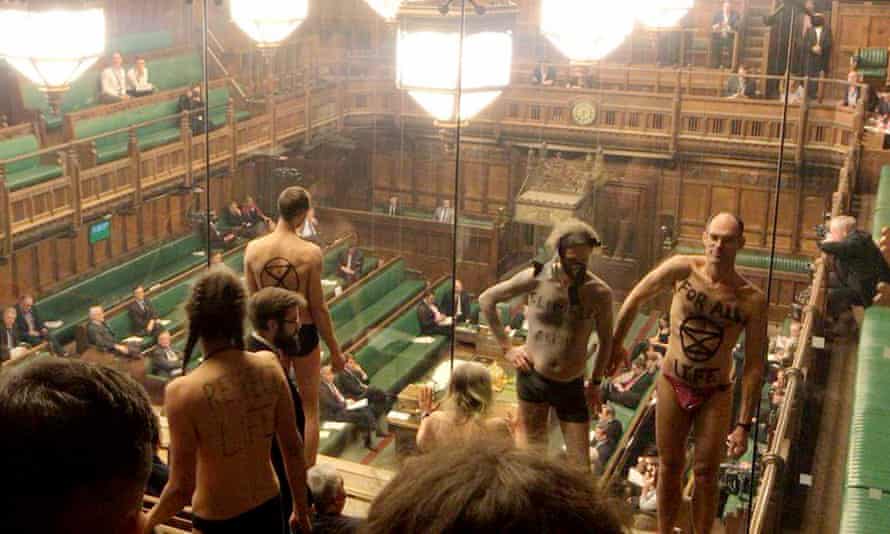
XR Protest

The Third Discourseman

Since there might eventually be people who support me in my ministry-training looking at this blog, and seeing as I write a couple of talks a term, either for the sake of practice/receiving feedback or actual talks I deliver for the sake of teaching, I thought I’d start uploading some of them as blogs, along with any feedback I received plus my own reflections. This is the first- a talk on Jonah chapter 3 I gave yesterday to a group of male students as part of a student retreat my church is running. I’ve left in some of my formatting. Bold headings weren’t said aloud, but they show the rough structure of my talk. The ‘template’ I’m using is AEIOU- grab their ATTENTION, ENGAGE their interest (show them why the talk is relevant to them), INSIGHTS (give your insights into the passage, i.e. the actual content of what you think God is saying in the passage), OVER to U (end by putting the ball in their court- what are they going to do/think/change after hearing this?). I’ve left the AEIOU headings in too, so you can see roughly what each paragraph is hoping to achieve. Bold words are personal notes for me about which words I want to stress/emphasise as I’m speaking.

Continue reading “Jonah 3 and the End of the World”

Brothers of the heart

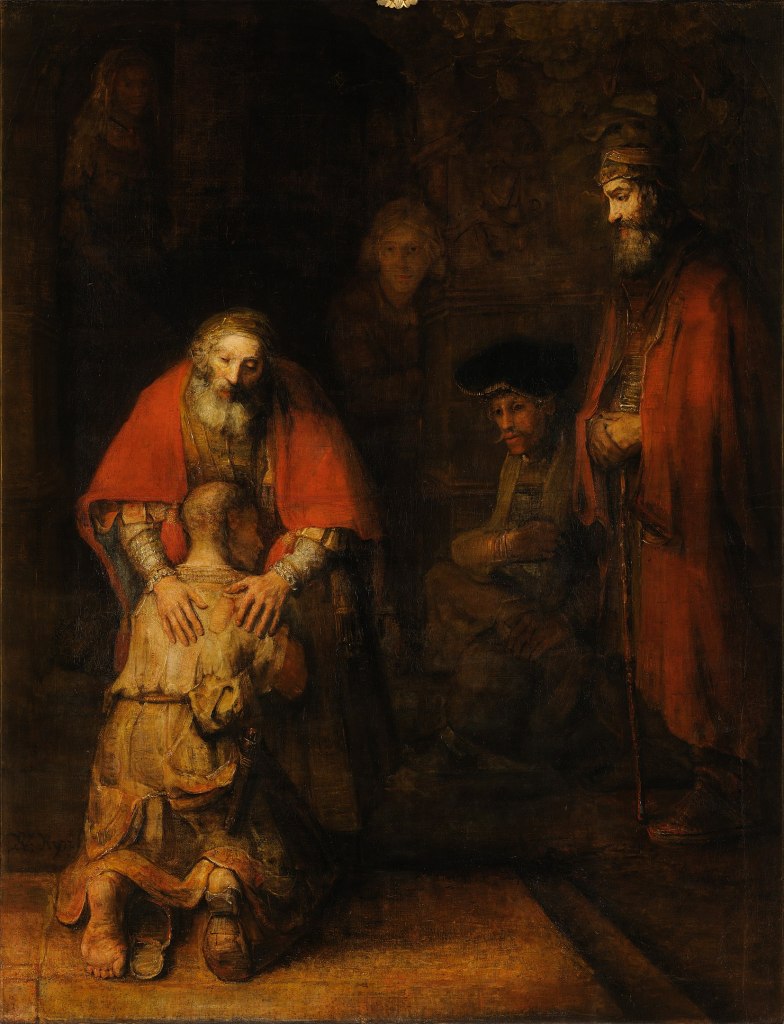
Rembrandt’s The Return of the Prodigal Son

The Fourth Discourseman

“Son, you are always with me, and all that is mine is yours. It was fitting to celebrate and be glad, for this your brother was dead, and is alive; he was lost, and is found.”

The so-called parable of the prodigal son, masterfully brought to life in this painting by Rembrandt, is justifiably famous. For most Christians, it serves as the archetypal description of our coming to Christ, explaining what it means to move in repentance from the mire of sin to the gracious open arms of God our Father. There isn’t really a better picture of the horror of our own sin and the wonder of our adoption into God’s family. Those of us who know Christ see ourselves in the redemptive arc of the son, our sin and mistakes in his pig sties, our joy in his father’s embrace.

Continue reading “Brothers of the heart”